Wellness Care Booking Experience
A process-focused UX/UI case study exploring how a wellness-oriented digital experience can reduce friction, build trust, and guide users more clearly through service discovery and booking.
Services:
UX Research, UX/UI Design, Responsive Web Design
Industry:
Health & Wellness
Timeline
4 Weeks
The Challenge
The project focused on improving a digital experience in a sensitive context where users need clarity, reassurance, and low-friction navigation. The main challenge was to structure the website in a way that made services easier to understand, the journey more intuitive, and the overall interface calmer and more trustworthy.
Clarify service categories and benefits
Reduce friction in the path toward booking
Build a more consistent and supportive visual system
Balance emotional sensitivity with clear conversion goals
The Process
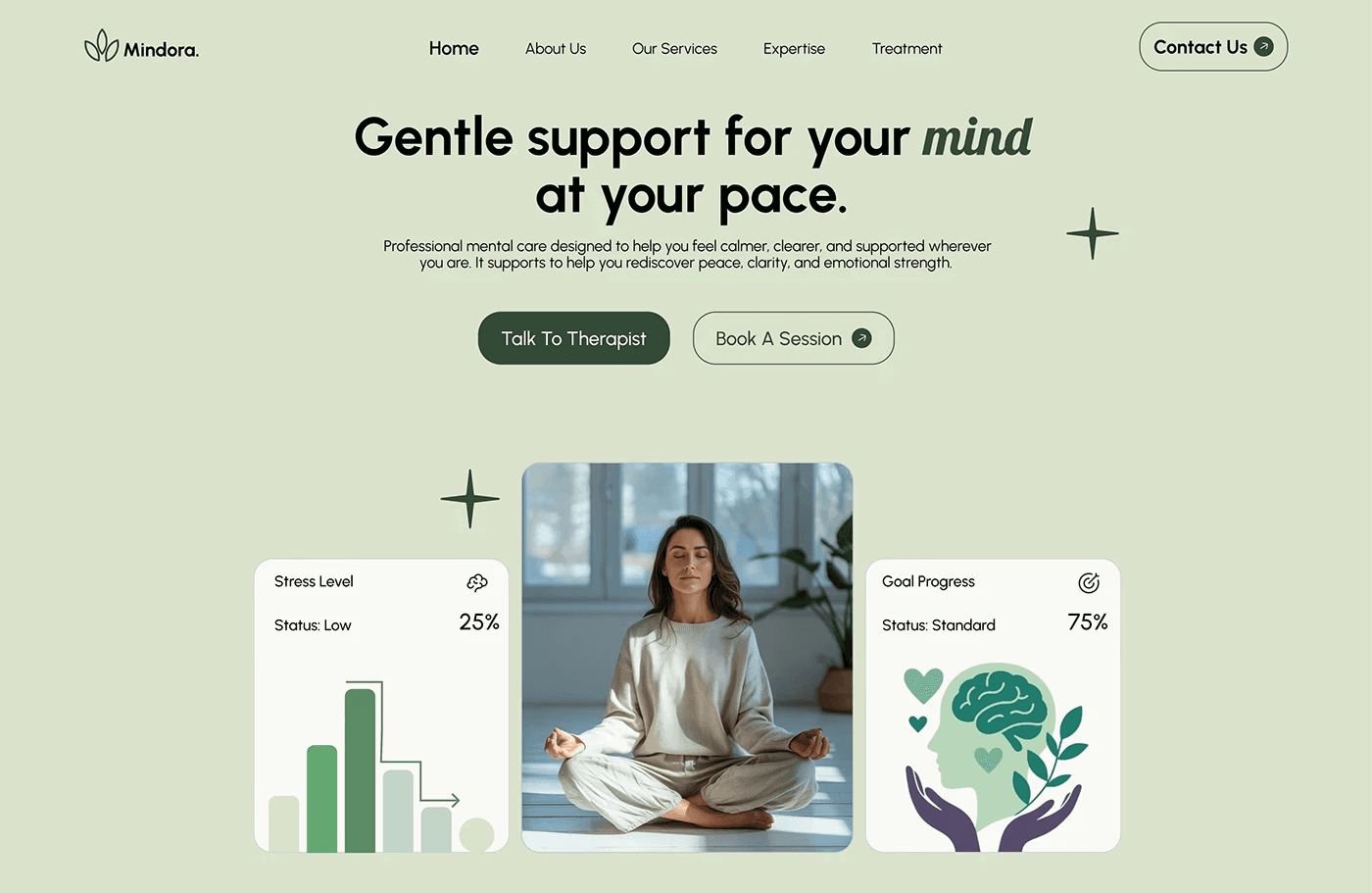
My approach focused on simplifying the user journey while designing a visual environment that felt calm, accessible, and supportive. I worked through content hierarchy, section structure, service presentation, and call-to-action placement to create a more guided experience from landing to booking intent.
Process blocks
1. Content & Structure Review
I first looked at how the experience should be organized so users could quickly understand what the platform offers, who it is for, and what action to take next.
2. Information Hierarchy
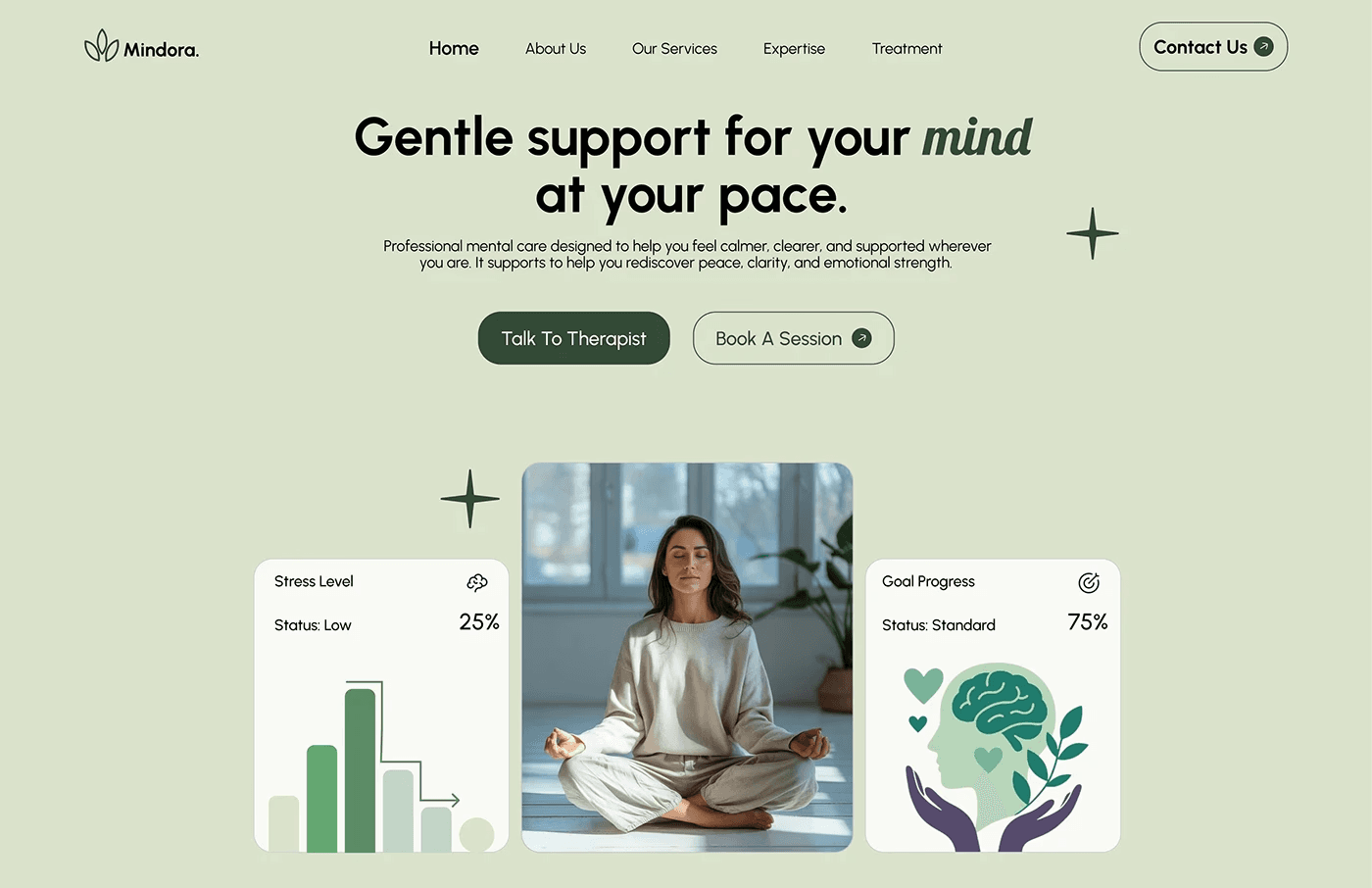
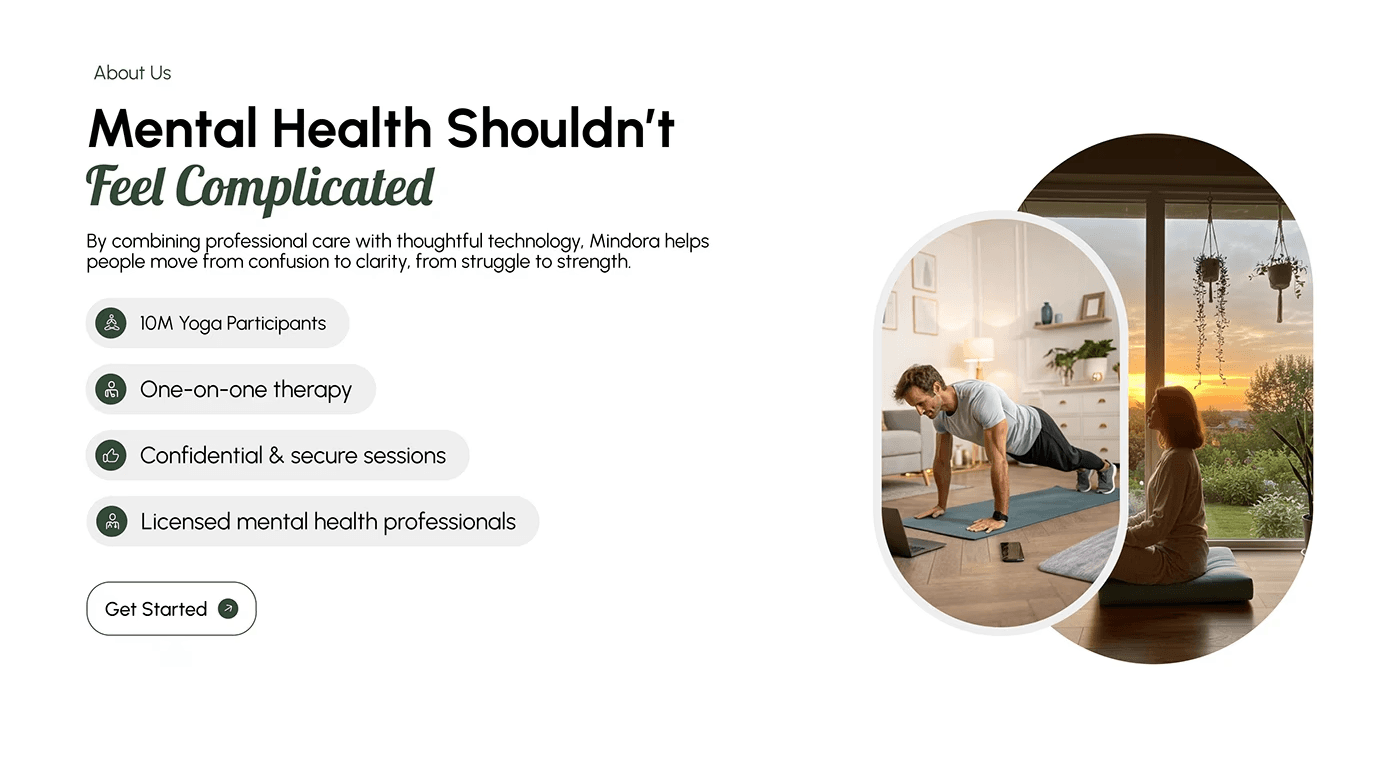
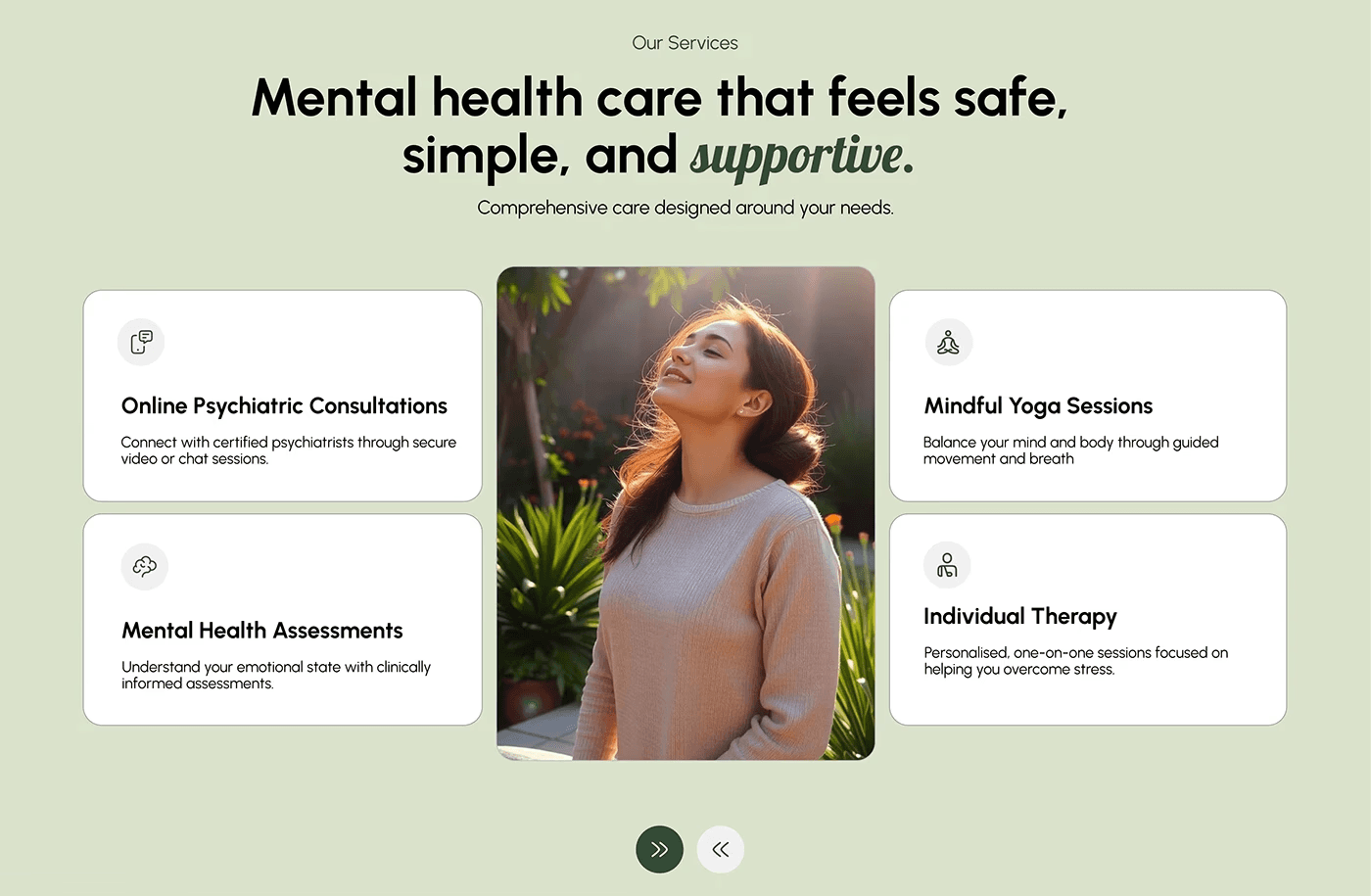
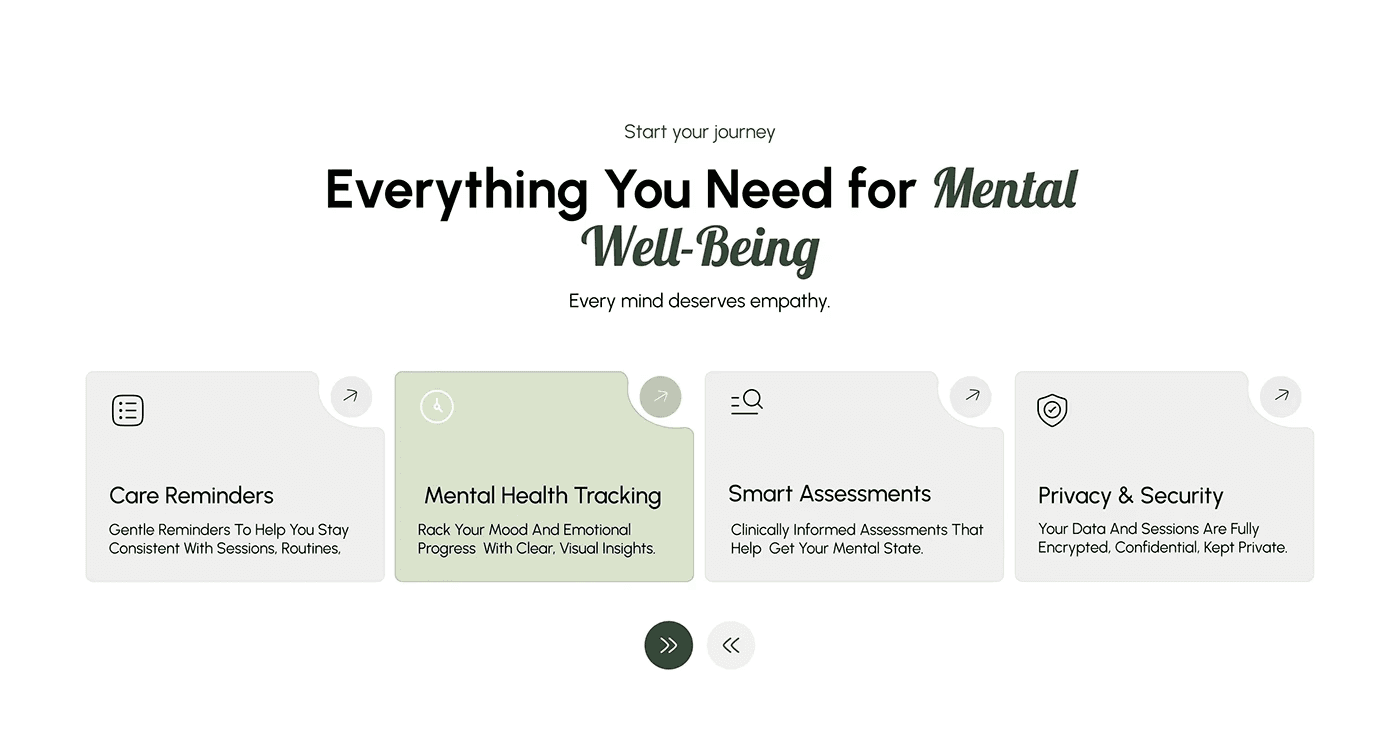
I restructured the page into clear sections: introduction, value proposition, services, process explanation, supportive features, trust elements, and final call to action.
3. User Journey Simplification
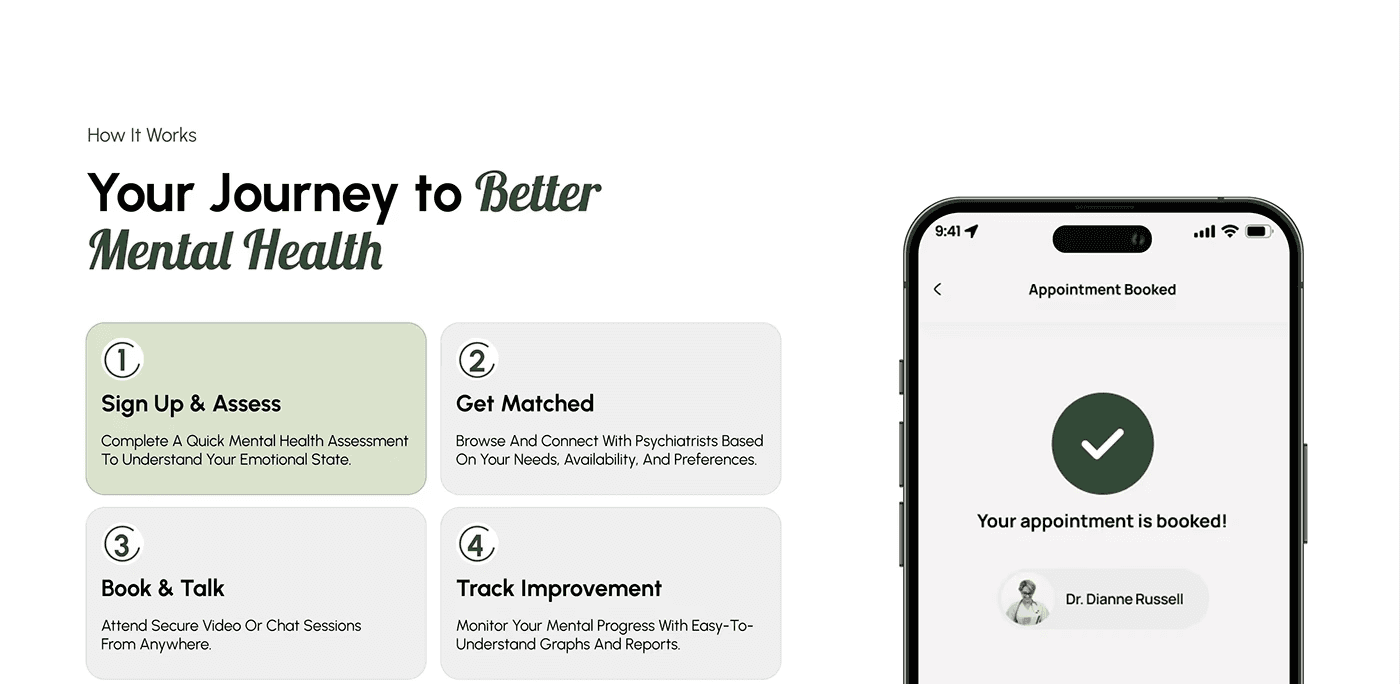
A key focus was reducing hesitation by making the path more readable and progressive. Each section was designed to answer a specific user question before asking for commitment.
4. Visual Direction
I developed a softer interface direction using rounded shapes, generous spacing, muted tones, and supportive imagery to create a sense of calm without losing clarity.
5. Responsive Thinking
The layout was also considered across device contexts, with attention to modular sections, mobile readability, and CTA visibility.

Key Design Decisions
The final direction was shaped by a few core principles: emotional clarity, visual calm, and guided progression. Rather than overwhelming users with too much information at once, the interface was designed to reveal content in a paced and understandable way.
Soft visual language to reduce perceived tension
Clear sectioning to support scanning and comprehension
Repeated trust signals throughout the journey
Accessible call-to-action placement without aggressive pressure
Modular card-based content for services and feature communication